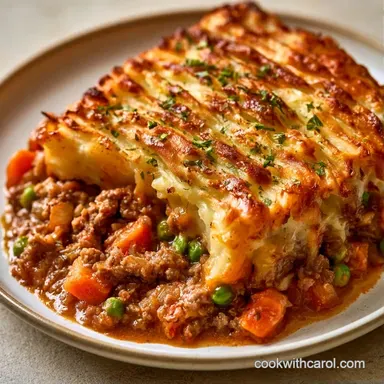
Homemade Shepherd's Pie with Golden Potato Crust

- Prep20 Mins
- Cook45 Mins
- Servings8 slices
- Time: 20 min active + 45 min cook, including a 10-minute cooling rest
- Texture: Golden, peaked potato crust over a thick, hearty meat stew
- Serve with: Steamed peas or a crisp green salad
My Famous Homemade Shepherds Pie Guide
The sound of a fork cracking through a deep golden brown potato crust is the best part of this meal. You get a scoop of creamy mash and a thick, savory lamb gravy that doesn't run all over the plate. It's the kind of food that makes the whole house smell like a cozy Sunday afternoon.
This recipe focuses on high-impact, low-cost ingredients. You don't need fancy equipment, just a sturdy skillet and a pot. It's a great way to feed a crowd without spending a fortune, especially if you use budget-friendly root vegetables.
The goal here is structure. By managing the moisture in the meat and the starch in the potatoes, you get a pie that holds its shape when sliced. It's hearty, filling, and stays satisfying until the last bite.
Ingredient Deep Dive
- 1½ lb ground lamb
- 2 tbsp unsalted butter
- 1 large yellow onion, diced
- 3 medium carrots, diced
- 2 garlic cloves, minced
- 2 tbsp all-purpose flour
- 2 tbsp tomato paste
- 2 cups low-sodium beef stock
- 1 cup frozen peas
- 1 tsp dried thyme
- 1 tsp salt
- 1/2 tsp black pepper
- 2 lb Russet potatoes, peeled and cubed
- 4 tbsp unsalted butter
- 1/2 cup whole milk
- 1 tsp salt
- 1/2 tsp black pepper
- 1/2 cup grated Parmesan cheese
To get the best results, it is useful to understand how these ingredients work together. While the lamb contributes rich flavor and fat, the potato layer covers the filling and forms a browned topping as it bakes.
| Component | Purpose | Substitute Notes |
|---|---|---|
| Ground Lamb | Core protein and flavor | Ground beef; results in "Cottage Pie." Use a 1:1 ratio. |
| Russet Potatoes | Starch for a fluffy topping | Yukon Gold; produces a creamier but denser finish. |
| Beef Stock | Liquid for the gravy | Vegetable broth; offers a lighter, less rich flavor. |
| Tomato Paste | Depth and rich color | Ketchup; sweeter profile, use a bit more. |
Necessary Tools
To prepare, gather a large pot for the potatoes and a deep skillet or Dutch oven for the meat. While a potato masher is ideal, a fork can be used if you have enough patience.
You will also require a baking dish, preferably ceramic or glass, that can withstand 400°F. The only "extra" tool needed is a meat thermometer, as it's the only way to ensure the lamb is safely cooked through.
Step-by-step Instructions
Prepare the potato topping
Combine the cubed potatoes with salted water in a large pot, bring to a boil, and simmer for 15–20 minutes or until fork-tender. Once drained well, return the potatoes to the pot. Mix in 4 tbsp butter, 1/2 cup whole milk, 1 tsp salt, and 1/2 tsp black pepper, mashing until the texture is velvety and smooth.

Cook the meat filling
Melt 2 tbsp butter in a wide pan over medium-high heat. Brown the ground lamb until deeply browned and the internal temperature reaches 160°F (71°C). For more information on safe temperatures, you can consult the USDA ground meat safety guidelines.
Toss the diced onion and carrots into the pan and sauté for 5–7 minutes until softened. Stir in the minced garlic and dried thyme, cooking for 1 minute until aromatic. Sprinkle in 2 tbsp flour and stir continuously for 2 minutes to cook out the raw flour taste.
Stir in the tomato paste, then gradually pour in the beef stock and simmer for 10 minutes, stirring now and then, until the sauce thickens. Fold in the frozen peas and season with 1 tsp salt and 1/2 tsp black pepper.

Assemble and bake
Set your oven to 400°F (200°C). Pour the meat filling into a baking dish and spread it into an even layer; let it rest for 10 minutes to prevent the potato topping from sinking. Spoon the mashed potatoes over the meat and use a fork to create ridges and peaks across the top. Sprinkle with the grated Parmesan.
Bake for 20–25 minutes, then switch to the high broiler for the final 2–3 minutes until the peaks are browned and crispy.

Why This Method Works
The way you handle the liquids determines if your pie is a success or a soup.
The Flour Buffer: Adding flour directly to the browned meat thickens the beef stock into gravy. Fork Ridges: Creating peaks in the potatoes increases the surface area, allowing the oven's heat to crisp up more of the topping.
| Method | Time | Texture | Best For |
|---|---|---|---|
| Classic Bake | 65 mins | Crispy top, thick base | Dinner parties |
| Slow Cooker | 6-8 hrs | Soft, uniform texture | Easy weeknights |
Avoiding Kitchen Disasters
When the filling is too watery, the potatoes often sink into the meat, creating a muddy mixture rather than distinct layers. This usually happens if the stock hasn't reduced enough or if you add the potatoes while the meat is still boiling.
Another issue is overly greasy meat. Lamb can release a lot of fat. If your pan looks like a lake of oil after browning, spoon out the excess before adding your vegetables.
Filling too runny
Simmer the meat mixture for an extra 5 minutes before assembling. This evaporates excess water and tightens the gravy.
Potatoes sinking
Let the meat filling cool for 10 minutes before topping it with mash. This prevents the potatoes from sliding into the hot gravy.
Greasy lamb
Drain the excess fat after the browning step but before sautéing the onions.
| Problem | Fix |
|---|---|
| Watery filling | Simmer 5 mins longer |
| Sinking mash | Cool filling before topping |
| Greasy base | Spoon out excess fat |
Storing Leftovers
This pie stays fresh and often tastes even better the following day once the flavors have blended. Keep any remaining portions refrigerated in a sealed container for 3 to 4 days, following USDA food safety guidelines.
To freeze the pie, let it cool down completely first. Wrap the pan tightly in foil and keep it in the freezer for up to 3 months. When reheating, avoid using a microwave to prevent the potatoes from becoming gummy. Instead, heat it in the oven at 350°F until the center is bubbling and reaches 165°F (74°C).
For individual slices, heat them until they reach 165°F (74°C).
Creative Twists and Swaps
You can easily adapt this recipe to what you have in the pantry. If you can't find lamb, ground beef is the standard swap, turning this into a Cottage Pie. Beef is leaner, so you might want to add an extra tablespoon of butter to the meat mix for richness.
For a different vegetable profile, try a root blend. Replace half of the potatoes with mashed parsnips or rutabaga. This adds a slightly peppery, earthy sweetness that pairs well with the lamb.
If you need a dairy-free version, swap the butter for a neutral oil, use unsweetened almond or oat milk in the mash, and omit the Parmesan. Just keep in mind that the topping won't brown as deeply without the butter and Parmesan.
Pairing Ideas

Since this is a very heavy, rich dish, you need something acidic or fresh to cut through the fat. A simple, bright salad is the way to go. An Italian side salad with a vinegar-based dressing balances the richness of the lamb perfectly.
If you want more vegetables, steamed kale or sautéed spinach with a squeeze of lemon juice works well. The bitterness of the greens cleanses the palate between bites of the creamy potatoes.
Common Questions
Can I use beef instead of lamb?
Yes, you can. Using ground beef transforms this into a Cottage Pie, which offers a milder flavor than the traditional lamb version.
How to store the remaining pie?
Put leftovers in a sealed container. Keep them refrigerated for 3 to 4 days to maintain freshness.
Why is flour added to the meat?
It thickens the beef stock. Stirring the flour in for 2 minutes removes the raw taste and ensures the filling is hearty and cohesive.
Is it safe to freeze?
Yes, for up to 3 months. Let the pie cool completely and wrap the dish tightly in foil before placing it in the freezer.
What makes the topping golden brown?
The broiler provides the finish. Setting the oven to high for the final 2-3 minutes browns the potato ridges and the Parmesan cheese.
Does the meat need a temperature check?
Yes, for food safety. Make sure the ground lamb hits 160°F (71°C) while browning.
How should I reheat a slice?
Heat it in the oven. Warm the portion until it hits an internal temperature of 165°F (74°C) to ensure it is hot throughout.
What pairs well with this meal?
A light, crisp salad balances the richness. Try serving this with a creamy side salad for a complete dinner.
My Famous Homemade Shepherd's Pie