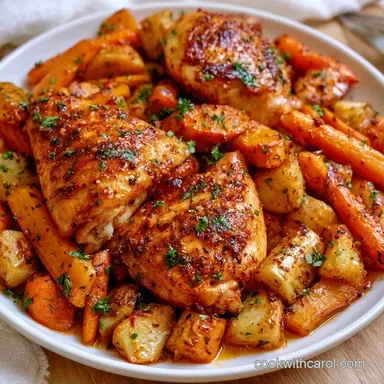
Sheet Pan Chicken Quarters and Root Veggies
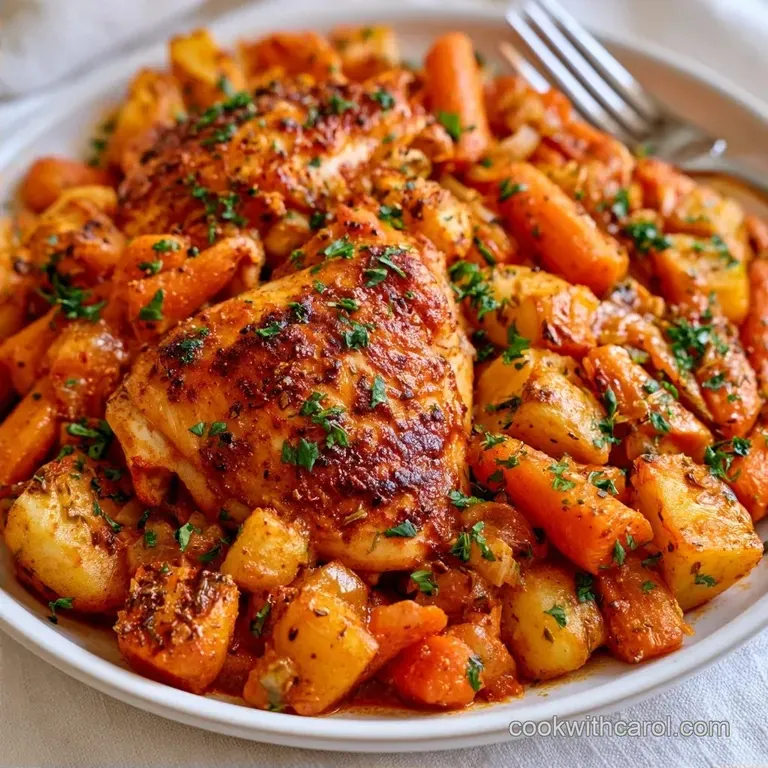
- Time: 10 min active + 45 min roasting
- Flavor/Texture Hook: Mahogany crisp skin with tender, salty root veggies
- Perfect for: Busy weeknights or healthy meal prep
The scent of roasting garlic and smoked paprika filling the kitchen at 425°F is enough to whet anyone's appetite. I used to spend my Sunday afternoons hovering over roasting pans and scrubbing through a mountain of greasy pots and dishes, all for a meal that took half a day to prepare.
It was an exhausting process that simply wasn't worth the effort.
Everything changed when I switched to a one-pan strategy. I initially worried the vegetables would merely steam and turn mushy, but by spacing the ingredients out and cranking up the temperature, I achieved those charred edges on the carrots and potatoes usually reserved for restaurants.
This recipe centers on the chicken leg quarter. It is a budget friendly cut that stays far juicier than the breast. You'll end up with a Sheet Pan Chicken dinner that feels like a feast but only requires a bit of chopping and a single tray to wash.
The Logic Behind the Roast
High Heat: Roasting at 425°F renders the chicken fat quickly, which creates a crisp exterior without overcooking the inside.
Natural Basting: The chicken sits atop the vegetables, letting the seasoned fats drip down and fry the potatoes and carrots as they cook. This is similar to how crispy baked leg quarters get their flavor.
Airflow: Keeping the ingredients in a single layer prevents steam from building up, which is the only way to get a roast instead of a boil.
| Method | Time | Texture | Best For |
|---|---|---|---|
| Sheet Pan | 60 mins | Crispy/Tender | Weeknights |
| Whole Roast | 3 hours | Soft/Juicy | Sunday Dinner |
Using a large rimmed pan is a must here. If the pan is too small, the vegetables crowd together and release too much moisture, which ruins the crispiness.
The Ingredient Breakdown
| Ingredient | What It Does | Best Swap |
|---|---|---|
| Chicken Leg Quarters | Provides fat and protein | Thighs (reduce cook time) |
| Smoked Paprika | Adds color and woodsy flavor | Cumin or Chili Powder |
| Baby Potatoes | Absorbs chicken drippings | Parsnips or Turnips |
| Olive Oil | Conducts heat for browning | Avocado Oil |
Necessary Kitchen Gear
You don't need much for this, but a few things make it easier. A large, rimmed baking sheet is non negotiable so the oil doesn't spill over your oven floor. I always use parchment paper because it stops the skin from sticking and makes the cleanup a breeze.
A large mixing bowl is handy for tossing the veggies. You could do it right on the pan, but you'll likely miss a few spots, leaving some carrots bland. A meat thermometer is the only "pro" tool I insist on. It's the only way to know the chicken is safe without cutting into it and letting the juices escape.
Essential Tools List
- Large rimmed sheet pan
- Parchment paper
- Large mixing bowl
- Meat thermometer
- Paper towels
The Roasting Steps
- Set oven to 425°F (218°C) and line a large rimmed baking sheet with parchment paper.
- In a large bowl, combine the halved baby potatoes, sliced carrots, and red onion wedges with 1 tbsp olive oil, salt, and pepper.
- Spread the seasoned vegetables in a single layer on the prepared pan, leaving room for the chicken.
- Thoroughly pat the chicken quarters dry with paper towels. Note: Dry skin is the only way to get it crispy.
- Whisk together the remaining 2 tbsp olive oil, smoked paprika, garlic powder, onion powder, salt, and pepper in a small bowl.
- Rub the spice blend generously under and over the skin of each piece until evenly coated.
- Place the seasoned chicken on top of the vegetables.
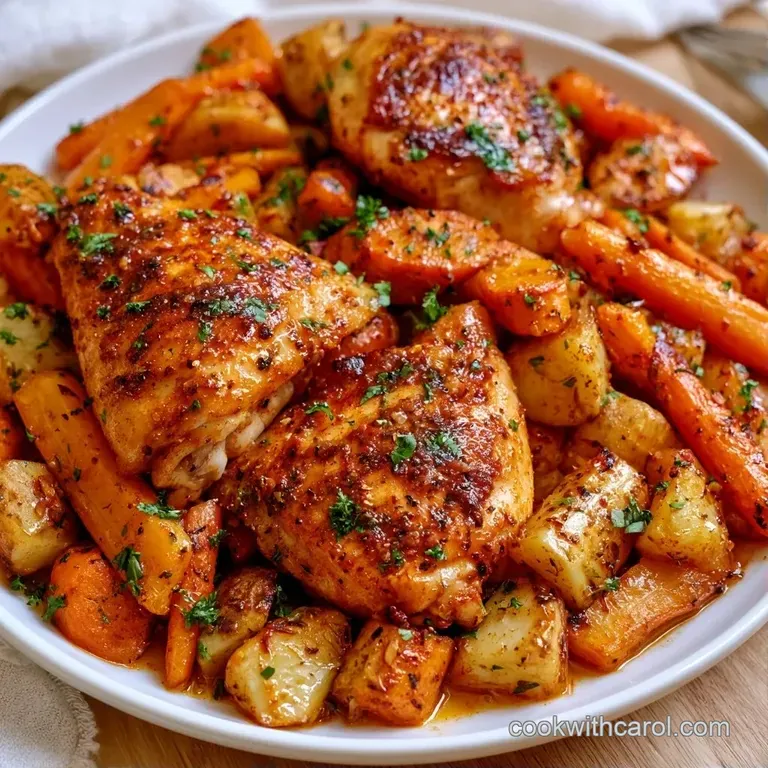
- Roast for 40–45 minutes until the skin is deep mahogany and potatoes are fork tender. Confirm the chicken thighs have cooked to 165°F (74°C) internally.
- Allow the meat to rest on the pan for 5 minutes before serving to lock in the juices.
Fixing Common Issues
Soggy Vegetables
This happens when the pan is overcrowded. If the carrots and potatoes are touching too much, they steam. Use two pans if you're doubling the recipe.
Dry Meat
Overcooking is the usual culprit. Start checking the internal temperature at the 35 minute mark. If you're using a convection oven, the meat may cook 5-10 minutes faster than in a standard oven.
Pale Skin
This is usually caused by too much moisture on the skin or an oven that hasn't reached temperature. Always pat the chicken dry and let the oven preheat fully before sliding the tray in.
| Goal | What to change |
|---|---|
| Extra Crispy | Use a wire rack over the veggies |
| Sweeter Veggies | Add a drizzle of maple syrup |
| Faster Cook | Cut potatoes into smaller quarters |
Storage and Leftovers
Place leftover Sheet Pan Chicken and veggies in an airtight glass container. They will stay fresh in the fridge for 3 days. For longer storage, the chicken and carrots can be frozen for 2 months, although the potatoes might become slightly grainy once thawed.
To reduce waste, save the chicken bones. Once the meat is gone, simmer them alongside some onion peels and carrot scraps to create a simple stock for your next soup. It's a waste of flavor to discard them.
When reheating, skip the microwave to prevent the skin from becoming rubbery. Instead, place your leftovers on a toaster oven tray at 350°F for roughly 10 minutes.
Pairing Your Meal
This meal is quite complete on its own, but a bit of acidity cuts through the richness of the chicken fat. I love serving this with a simple arugula salad tossed in lemon and olive oil.
If you're feeding a crowd, some steamed green beans or a side of quinoa works well. For those who want a different vibe, this is a great alternative to garlic pesto chicken when you want something more rustic.
Different Flavor Ideas
Mediterranean Style: Swap the smoked paprika for dried oregano and add kalamata olives to the pan for the last 15 minutes of roasting.
Zesty Citrus: Squeeze half a lemon over the chicken and vegetables immediately after they come out of the oven. The heat will mellow the lemon juice and brighten the whole dish.
Low Carb Option: Replace the baby potatoes with cauliflower florets or chunks of rutabaga. They roast at the same speed as the carrots and soak up the chicken fat just as well.
Honey Garlic Glaze: Mix 1 tbsp honey with 1 tsp soy sauce and brush it on the chicken for the last 5 minutes of cooking. This gives the skin a glossy finish and a sweet salty punch.
Kitchen Truths
Searing meat does not "seal in juices." Moisture loss happens whether you sear first or not. The browning you see on the skin is just for flavor and looks.
Some people think you need to oil the pan itself. You don't. Oiling the ingredients directly ensures they are coated and prevents the oil from burning or smoking on the bare metal.
Another myth is that chicken must be room temperature before roasting. While it can help a tiny bit with even cooking, the high heat of this Sheet Pan Chicken method overcomes that quickly. Just get it in the oven.
Right then, you've got a plan. This recipe is all about letting the oven do the hard work. Just remember to pat that skin dry and give the meat a few minutes to rest, and you'll have a dinner that tastes like it took way more effort than it actually did. Let's crack on.
High in Sodium
980 mg 980 mg of sodium per serving (43% 43% of daily value)
The American Heart Association recommends a daily sodium limit of 2,300 mg, with an ideal limit of 1,500 mg for most adults to reduce the risk of cardiovascular disease.
Tips to Reduce Sodium
-
Cut the Sea Salt-25%
Reduce the sea salt from 1.5 tsp to 0.5 tsp or substitute with a salt free seasoning blend to significantly lower the sodium count.
-
Add Citrus Acidity-15%
Squeeze fresh lemon juice over the chicken and vegetables after roasting; the acidity tricks the palate into perceiving more salt.
-
Use Fresh Aromatics-10%
Replace granulated garlic with freshly minced garlic to provide a bolder, more pungent flavor that reduces the need for added salt.
-
Boost with Fresh Herbs
Add fresh rosemary or thyme to the roasting pan to enhance the earthy flavors of the chicken and carrots.
Recipe FAQs
How long do you bake chicken quarters?
Roast them at 425°F for 40 to 45 minutes.
Tip: Use a meat thermometer to ensure the internal temperature reaches 165°F.
Is it true you should cover chicken quarters while baking?
No, this is a common misconception: Bake them uncovered to get a deep mahogany, crispy skin.
Tip: Pat the skin completely dry with paper towels before seasoning to help it crisp.
How to ensure baked chicken isn't red inside?
Cook the meat until a thermometer reads exactly 165°F in the thickest part.
Tip: Let the chicken rest for 5 minutes before carving to redistribute the juices.
What sides pair well with this meal?
A crisp, acidic salad balances the richness of the roasted chicken and potatoes.
Tip: Serve this with a classic Italian salad for a complete dinner.
Sheet Pan Chicken Quarters