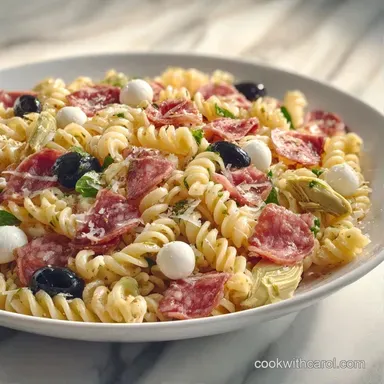
Classic Antipasto Pasta Salad: Tangy and Briny
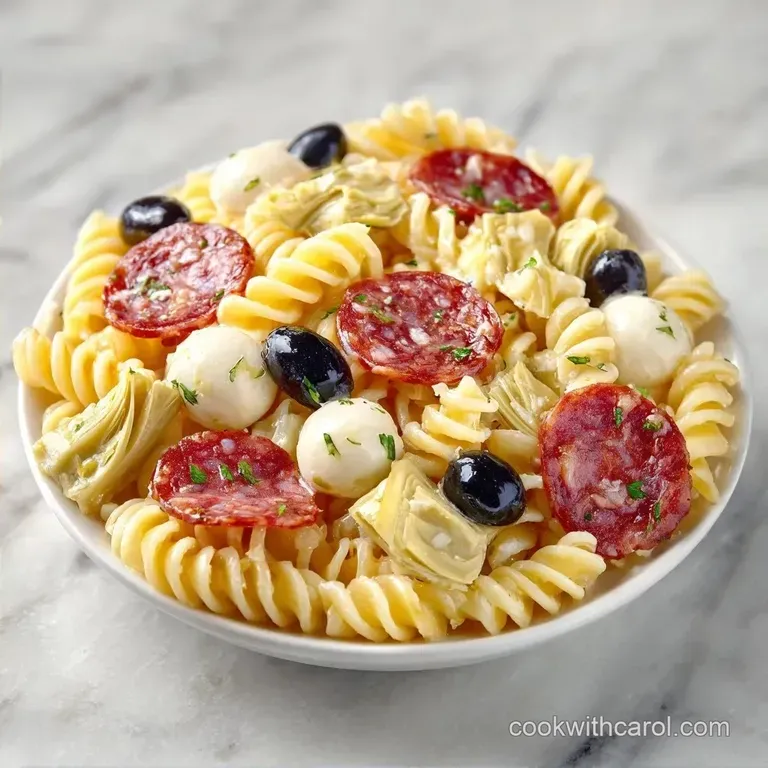
- Time: 15 min active + 12 min cook (Total 27 min)
- Flavor/Texture Hook: Tangy, briny, and chewy with a zesty vinegar finish
- Perfect for: Summer potlucks, meal prep, or a quick side for grilled meats
The scent of red wine vinegar and minced garlic hitting a bowl always takes me back to my aunt's backyard parties. I remember one July where she made a massive tub of this stuff, and it was the only thing left on the table by 4 PM.
Everyone else's potato salad had gone soft in the heat, but her pasta salad stayed crisp and punchy. It was the one dish that actually tasted better as the afternoon wore on.
I used to think the secret was just adding more oil, but I learned the hard way that too much fat masks the flavor of the olives and peppers. You want that sharp, vinegary bite to wake up your taste buds. That's why I've focused on the ratio of oil to vinegar here.
If you're looking for a crowd pleaser, this Classic Antipasto Pasta Salad is it. It's a hearty mix of salty meats, creamy cheese, and tangy vegetables. It doesn't require any fancy equipment, just a big bowl and a bit of chopping. Let's get into how to make it without the common mistakes that lead to soggy noodles.
Classic Antipasto Pasta Salad
The magic of this dish is all about the contrast. You have the salty hit of the salami, the creamy pull of the mozzarella, and the sharp acidity of the pepperoncinis. When you combine these with a sturdy pasta, you get a bite that feels complete.
It's a heavy hitter in the world of Italian Pasta Salad Recipes because it doesn't rely on mayo, which can get heavy and spoil quickly in the sun.
I've found that the key to a great result is the temperature of the pasta. If you toss hot noodles with the dressing, they soak up the liquid too fast and become mushy. By rinsing them in cold water, you stop the cooking process and lock in the structure. This keeps the salad feeling fresh for days in the fridge.
If you want something slightly different, you might try a mozzarella ball pasta salad, but for those who want the full deli platter experience, this version is the way to go. It's a balanced, briny, and filling dish that works as a main or a side.
The Secret to Better Flavor
The reason some pasta salads taste like plain noodles and others taste like a gourmet deli is all in how the ingredients interact with the dressing.
- Starch Control: Rinsing the pasta removes excess surface starch, preventing the noodles from clumping together in a sticky mass.
- Acid Penetration: Red wine vinegar breaks down the surface of the pasta slightly, allowing the garlic and oregano to penetrate deeper into the noodle.
- Fat Balance: The olive oil coats the ingredients, creating a barrier that prevents the vinegar from making the mozzarella taste too sour.
- Salt Equilibrium: Because the salami and olives are already salty, we use a measured amount of additional salt to enhance the flavors without making it over seasoned.
Right then, before you start chopping, you need to decide how you want to approach this. Some people like a "fast" version where they throw everything in and eat it immediately, but the "classic" way involves a bit of resting time for the flavors to meld.
| Feature | Fast Version | Classic Version | Impact |
|---|---|---|---|
| Resting Time | 0 mins | 1-2 hours | Classic has deeper flavor |
| Pasta Temp | Warm/Room | Chilled | Classic has better texture |
| Dressing | Tossed & Served | Absorbed | Classic is more cohesive |
Ingredient Deep Dive
Not all antipasto ingredients are created equal. Choosing the right type of salami or the right vinegar can completely change the profile of the salad.
| Ingredient | Science Role | Pro Secret |
|---|---|---|
| Rotini Pasta | Sauce Carrier | The spirals trap dressing and small bits of garlic |
| Red Wine Vinegar | Flavor Brightener | Use a decent quality vinegar; avoid "distilled" for this |
| Hard Salami | Umami Base | Dice into 1/2 cm cubes for a bit of meat in every bite |
| Mozzarella Pearls | Texture Contrast | Keep them cold until the last second to maintain a "snap" |
I've noticed that some people try to use soft salami, but that just disappears into the pasta. Hard salami holds its shape and provides a necessary chew. For a more detailed look at the nutritional components of these ingredients, USDA FoodData shows how the fats in olive oil help the body absorb the vitamins from the fresh parsley and peppers.
Equipment Needed
You don't need a professional kitchen for this. In fact, the fewer tools you use, the easier the cleanup.
- Large Pot: For boiling the pasta.
- Colander: To drain and rinse the noodles.
- Extra Large Mixing Bowl: You need plenty of room to toss everything without spilling.
- Small Bowl or Jar: For whisking the dressing.
- Chef's Knife and Cutting Board: For the dicing.
- Large Spoon or Tongs: For the final mixing.
Trust me, don't try to mix this in a medium bowl. You'll end up with a mountain of pasta on your counter. Get the biggest bowl you own.
Step-by-step Instructions
Follow these steps exactly to ensure your Classic Antipasto Pasta Salad doesn't turn into a gummy mess.
Phase 1: The Pasta Prep
- Bring a large pot of salted water to a rolling boil. Note: Use the full 1 tbsp of salt for the water to season the pasta from the inside out.
- Add the pasta and cook until al dente, which is usually 1–2 minutes less than the package directions.
- Drain the pasta in a colander and immediately rinse with cold water until the noodles feel cool to the touch. Note: This stops the cooking and removes the sticky starch.
Phase 2: The Antipasto Assembly
- Dice the hard salami and mozzarella into uniform small cubes. Note: Keep the pieces roughly the same size as the pasta spirals for a balanced bite.
- In an extra large mixing bowl, combine the diced salami, mozzarella, olives, artichoke hearts, pepperoncini, and red onion.
Phase 3: The Final Toss
- Whisk together the olive oil, red wine vinegar, minced garlic, dried oregano, salt, and black pepper in a separate bowl until the mixture is emulsified (no longer separating).
- Add the cooled pasta to the bowl of antipasto ingredients.
- Pour the dressing over the mixture and toss gently with a large spoon until every noodle is glossy and evenly coated.
- Fold in the fresh parsley last to maintain a vibrant color.
Chef's Note: If you're making this for a party the next day, save about 2 tablespoons of the dressing. The pasta will soak up some of the liquid overnight, and a quick splash of fresh dressing right before serving brings the shine back.
How to Fix Common Problems
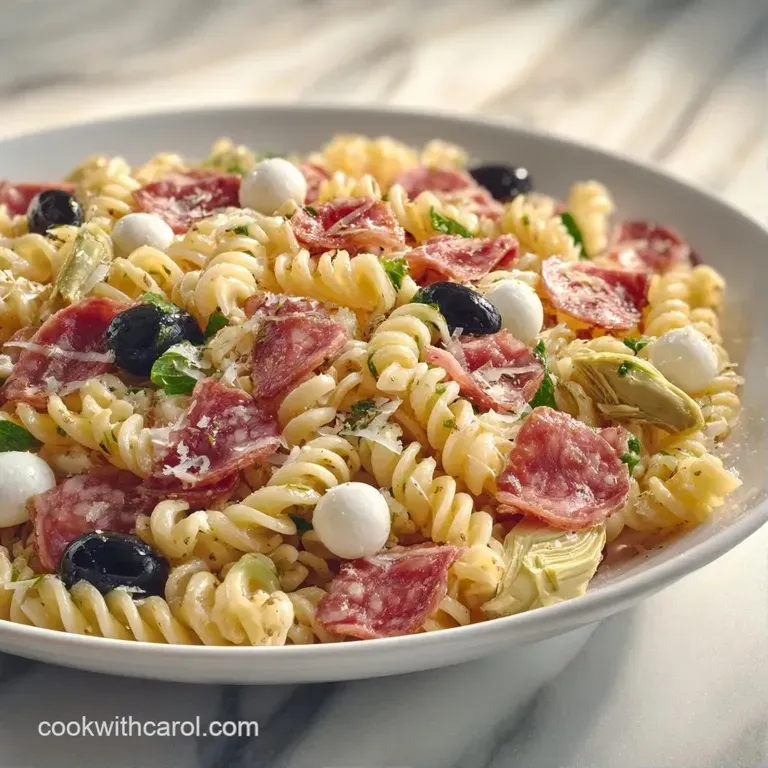
Even with a simple recipe, things can go sideways. Usually, it comes down to the pasta texture or the balance of the dressing.
Why Your Pasta Is Gummy
This usually happens when the pasta is overcooked or not rinsed enough. If you leave the noodles in the pot, the carryover heat continues to cook them, releasing more starch that turns into a glue like coating. Always rinse with cold water until the water runs clear.
If the Flavors Feel Muted
If your salad tastes "flat," you're likely missing acidity. Salt enhances flavor, but acid (vinegar) awakens it. A quick squeeze of fresh lemon juice or an extra teaspoon of red wine vinegar can wake up the whole dish.
If the Salad Becomes Too Dry
Pasta is like a sponge. Over time, it absorbs the olive oil and vinegar. If it looks dry, don't just add more oil, that makes it greasy. Instead, add a mix of oil and vinegar, or a spoonful of the brine from the artichoke jar.
| Problem | Root Cause | Solution |
|---|---|---|
| Bland Taste | Not enough acid/salt | Add 1 tsp red wine vinegar |
| Mushy Noodles | Overcooked pasta | Reduce cook time by 2 mins |
| Oily Film | Dressing not emulsified | Whisk dressing longer before adding |
Common Mistakes Checklist
- ✓ Did you rinse the pasta in cold water?
- ✓ Did you cook the pasta 2 minutes under the box instructions?
- ✓ Did you dice the salami and cheese into small, uniform cubes?
- ✓ Did you whisk the dressing until it stayed together?
- ✓ Did you add the parsley at the very end?
Make It Your Own
The beauty of a Classic Antipasto Pasta Salad is that it's very forgiving. You can swap things out based on what's in your pantry.
For a Creamy Antipasto Pasta Salad
If you prefer a creamy vibe over a zesty one, whisk in 2 tablespoons of mayonnaise or Greek yogurt into the dressing. This gives it a velvety texture while keeping the tang. If you love creamy salads, you might also enjoy my Parmesan Peppercorn Pasta Salad.
For a gluten-free Version
Simply swap the rotini for a high-quality gluten-free pasta. I recommend a corn and rice blend because it holds up better to the vinegar. Be extra careful not to overcook gluten-free pasta, as it can go from "hard" to "mush" in about 30 seconds.
For a Vegan Twist
Remove the salami and mozzarella. Replace the salami with sun dried tomatoes and the mozzarella with cubed firm tofu marinated in lemon and salt. Use a vegan friendly oregano and ensure your olives are plain.
Decision Shortcut:
- If you want more heat → double the pepperoncinis.
- If you want it more savory → add a handful of capers.
- If you want it lighter → swap rotini for baby spinach and chickpeas.
Scaling the Recipe
When you're feeding a crowd, you can't always just multiply everything by four. Some flavors become too intense when scaled up.
Scaling Down (1/2 Batch): Use 225g of pasta. For the dressing, it's easier to whisk 1 egg sized amount of oil and vinegar. Reduce the garlic to a small clove so it doesn't overpower the smaller volume of ingredients.
Scaling Up (2x-4x Batch): If you're quadrupling the recipe, only increase the salt and dried oregano by 3x. The briny ingredients (olives, salami, peppers) provide a lot of sodium, and too much extra salt can make the salad taste metallic.
Work in two separate large bowls if you don't have a commercial sized basin, otherwise, you won't get an even coat of dressing on the bottom layer.
For those making huge batches, I recommend using an Italian herb pasta salad approach for the base, which uses similar herbs but scales very well for large parties.
Kitchen Myths Debunked
There are a few things people tell you about pasta salads that just aren't true.
Myth 1: You should never rinse pasta. While this is true for hot pasta dishes (where you need the starch to make the sauce stick), it's a disaster for cold salads. Rinsing is mandatory here to stop the cooking and prevent the "clump" factor.
Myth 2: Adding dressing to hot pasta makes it flavor full. Actually, adding dressing to hot pasta can make the mozzarella melt slightly and the vegetables wilt. It also makes the pasta absorb the dressing too quickly, leaving the salad dry within an hour. Cold pasta, cold dressing.
Myth 3: You need a stand mixer for the dressing. A simple jar with a lid or a whisk in a bowl is all you need. The goal is a basic emulsion, not a mayonnaise level stability.
Preservation Secrets
Since this Classic Antipasto Pasta Salad is often made in advance, you need to know how to keep it fresh.
Storage Guidelines Keep the salad in an airtight container in the fridge. It stays great for 3 to 5 days. In fact, the flavor usually peaks around the 24 hour mark when the pasta has fully marinated in the red wine vinegar.
Freezing Do not freeze this salad. The mozzarella will become rubbery, and the fresh parsley will turn black. The vinegar also affects the structure of the pasta during the freeze thaw cycle, resulting in a mealy texture.
Zero Waste Tips Don't throw away the brine from the artichokes or pepperoncinis! You can use it as a base for a quick vinaigrette for a side salad, or use it to marinate grilled chicken. If you have leftover salami bits, fry them up in a pan until crispy and use them as a topping for a homemade pizza.
Presentation Tips
A salad that looks like a pile of mush isn't appetizing. You want the colors to pop.
First, use a wide, shallow bowl rather than a deep one. This prevents the heavier ingredients, like the salami and olives, from all sinking to the bottom. When you serve it, give it one final gentle toss to redistribute the dressing.
Garnish with extra fresh parsley and a few whole pepperoncini peppers on top for a professional look. If you're serving it at a party, place the bowl on a bed of ice or a chilled platter to keep the mozzarella crisp.
Finally, serve it with some toasted ciabatta or a side of grilled meats. The acidity of the Classic Antipasto Pasta Salad cuts right through the richness of grilled steak or chicken, making it a refreshing companion to any heavy meal.
Critical Sodium Level
2070 mg 2,070 mg of sodium per serving (90% 90% of daily value)
The American Heart Association recommends a daily limit of 2,300mg, with an ideal limit of 1,500mg for most adults to reduce cardiovascular risk.
Tips to Reduce Sodium
-
Swap the Salami-30%
Replace the hard salami with grilled chicken breast or roasted turkey to eliminate the high sodium found in processed cured meats.
-
Eliminate Added Salt-25%
Remove the 1 tbsp of salt from the pasta water and the 1/2 tsp in the dressing; the other salty ingredients provide enough flavor.
-
Rinse Brined Items-20%
Thoroughly rinse the black olives, marinated artichokes, and pepperoncini under cold water to wash away excess brine.
-
Modify the Cheese-15%
Use low-sodium mozzarella or reduce the quantity of mozzarella pearls to lower the overall salt contribution.
-
Boost Fresh Aromatics
Increase the amount of fresh parsley, minced garlic, and dried oregano to enhance the flavor profile without adding sodium.
Recipe FAQs
What are the ingredients in this antipasto pasta salad?
Rotini or fusilli, hard salami, mozzarella pearls, black olives, artichoke hearts, pepperoncini, and red onion. These are tossed in a dressing of olive oil, red wine vinegar, garlic, oregano, salt, and pepper, then finished with fresh parsley.
What is the difference between a basic pasta salad and an antipasto version?
The inclusion of traditional Italian appetizer components. While basic salads focus on fresh vegetables, antipasto salads specifically feature cured meats, brined olives, and marinated vegetables.
How to make the zesty Italian dressing?
Whisk together olive oil, red wine vinegar, minced garlic, dried oregano, salt, and black pepper. If you nailed the stable emulsion in this dressing, use the same whisking method in our lemon olive oil pasta.
How to keep the pasta from getting mushy?
Cook the noodles 1–2 minutes less than the package directions and rinse them under cold water immediately. This preserves the al dente texture and prevents the pasta from sticking together.
Is it true that you should mix the parsley in with the other vegetables?
No, this is a common misconception. Fold in the fresh parsley last to maintain its vibrant color and prevent it from bruising.
Why is this a good recipe for picnics and potlucks?
The vinaigrette-based dressing keeps the ingredients fresh and stable. Unlike creamy salads, this version doesn't spoil as quickly in the heat and the flavors improve as they meld.
What are the key mistakes to avoid when preparing pasta salad?
Overcooking the pasta, skipping the cold rinse, unevenly dicing the salami and mozzarella, failing to emulsify the dressing, and adding herbs too early. Following the exact sequence of steps ensures a professional texture and color.
Classic Antipasto Pasta Salad for 8