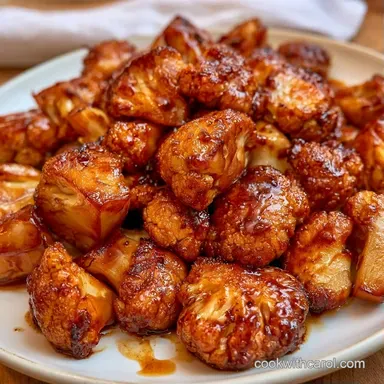
Balsamic Roasted Cauliflower with Honey

- Prep10 Mins
- Cook35 Mins
- Servings4
- Time: 10 min active + 35 min cooking
- Texture: Charred edges, tender stems, tacky glaze
- Serve with: Roasted chicken or a quinoa grain bowl
Balsamic Roasted Cauliflower
Imagine the smell of garlic and honey bubbling in a hot oven. The florets turn a deep, dark brown, and the edges get almost crispy while the stems stay tender.
It's a total shift from the mushy, pale cauliflower you get from steaming. This balsamic roasted cauliflower brings a tangy, sweet hit that makes it the star of the plate.
Whether you need a side for a holiday meal or a quick veggie dish, this approach works. Making an easy balsamic roasted cauliflower a go-to is simple once you nail the timing of the glaze.
Recipe Details
This dish relies on high heat to brown the vegetables before the sugars in the honey and vinegar hit the pan. If you add the glaze too early, the honey burns and turns bitter before the cauliflower is actually cooked through.
By roasting the veg first, you ensure the inside is tender and the outside is charred. The final quick blast in the oven just sets the glaze, leaving it tacky and rich.
What You'll Need
| Ingredient | Role | Alternative |
|---|---|---|
| Cauliflower | Primary vegetable | Broccoli (roast for 5 mins less) |
| Balsamic Vinegar | Zesty acidity | Apple cider vinegar with a hint of brown sugar |
| Honey | Sweetness and luster | Maple syrup (vegan alternative) |
| Olive Oil | Heat medium | Avocado oil |
- 2 lb cauliflower, divided into florets
- 3 tbsp olive oil Why this? Ideal for high-heat roasting
- 1 tsp salt
- 1/2 tsp black pepper
- 1/4 cup balsamic vinegar Why this? Delivers a deep, tangy foundation
- 2 tbsp honey Why this? Forms a tacky, glossy amber glaze
- 2 cloves garlic, minced
- 1/2 tsp dried thyme
Tools You'll Need
Equipment needs are minimal for this dish. A large mixing bowl allows you to toss the florets thoroughly without damaging them. A rimmed baking sheet is essential to prevent the glaze from leaking into your oven.
Using parchment paper is a huge help. Honey and balsamic can act like glue once heated, so the paper makes cleaning up effortless.
The Cooking Process
Preparing the Florets
Get your oven preheated to 400°F (200°C). In a large mixing bowl, combine 2 lb cauliflower florets with 3 tbsp olive oil, 1 tsp salt, and 1/2 tsp black pepper, tossing until well coated. Arrange the cauliflower in a single layer on a baking sheet lined with parchment.

Roasting for Texture
Bake for 15 minutes. Use a spatula to stir and flip the cauliflower, then roast for an additional 10–15 minutes until the edges are charred and the stems are tender.

Mastering the Glaze
While the vegetables roast, whisk together 1/4 cup balsamic vinegar, 2 tbsp honey, 2 cloves minced garlic, and 1/2 tsp dried thyme in a small bowl.
Final Caramelization
Remove the pan from the oven and drizzle with the balsamic honey mixture, tossing the florets right on the pan to coat. Return them to the oven for a final 5–7 minutes until the glaze is tacky and glossy amber.

Why This Method Works
- Staged Glazing: Adding the honey and vinegar at the end prevents the sugar from burning before the cauliflower is cooked.
- High Heat: 400°F is the sweet spot that creates a browned, savory crust while the centers stay tender.
Pro Tips & Pitfalls
Your balsamic roasted cauliflower might come out soggy if the pan is too crowded. When florets touch, they trap steam, which prevents browning. Use two pans if you can't spread them out.
If the glaze looks too thin, you might have tossed it too late or used too much vinegar. The final 5-7 minutes in the oven is where the liquid reduces into a sticky coating.
Fixing Mushy Florets
Avoid overcrowding. If the pieces are packed in, they steam instead of roast. Give them space to breathe.
When the Glaze Burns
Watch the clock closely during the final stage. Sugar burns fast, and 2 minutes can be the difference between rich brown and black.
Fixing Bland Taste
Don't skip the initial salt. Salting the cauliflower before roasting draws out moisture and enhances the natural nuttiness of the veg.
| Problem | Root Cause | Solution |
|---|---|---|
| Soggy texture | Pan too crowded | Use two baking sheets |
| Bitter taste | Glaze overcooked | Reduce final roast by 2 mins |
| Pale color | Oven too cold | Ensure oven hits 400°F before starting |
Storage and Leftovers
Keep any remaining portions in a sealed container in the refrigerator for up to 4 days.
Skip the microwave when reheating to prevent the cauliflower from becoming soggy. To restore the crunch, heat them for 3–5 minutes in an air fryer set to 350°F (175°C) or return them to the oven at 400°F (200°C) for 5 minutes.
To minimize food waste, save the cauliflower leaves. Just trim them, season with a pinch of salt and oil, and roast them with the florets for an extra crispy treat.
Flavor Variations
Another way to enjoy balsamic roasted cauliflower is to swap the honey for maple syrup. This makes the dish vegan and adds a slightly earthier sweetness.
If you want something more savory, try adding 1/4 cup of grated Parmesan during the final 5 minutes of roasting. For other ideas, you might like a Parmesan Cauliflower Steaks recipe or a Tandoori Roasted Cauliflower if you want a spice kick.
Maple-Balsamic Vegan
Use 2 tbsp maple syrup instead of honey.
Parmesan Garlic
Add grated Parmesan and extra garlic powder in the final roasting step.
Serving Suggestions

This dish is great as a side for roasted chicken or a grilled steak. The acidity of the balsamic cuts through rich meats.
If you're keeping it vegetarian, serve it over a bed of creamy polenta or whipped feta. The tanginess of the cheese pairs well with the honey glaze.
| Serving Style | Best Pairing | Why It Works |
|---|---|---|
| Side Dish | Roast Chicken | Acid cuts through fat |
| Main Course | Quinoa & Spinach | Balanced nutrients |
| Appetizer | Whipped Feta | Creamy vs Tangy |
Recipe FAQs
How to bake cauliflower in the oven?
Start by heating the oven to 400°F (200°C), then toss the florets with olive oil, salt, and pepper. Roast for 15 minutes, flip, and roast for another 10-15 minutes, then glaze and finish for 5-7 minutes.
Can I make crispy cauliflower bites instead?
Yes, you can cut the cauliflower into smaller, bite-sized pieces to increase the surface area. These smaller pieces char faster and create a crispier texture than larger florets.
Do you fry cauliflower for a different result?
Frying provides a more immediate crust and a softer interior compared to roasting. This method uses a pan and oil rather than an oven to brown the vegetables.
Why does cauliflower often taste bland?
It lacks strong natural sugars and salts on its own. Using a combination of honey, balsamic vinegar, and garlic creates a complex glaze that transforms the flavor.
What is the best way to prepare cauliflower florets?
Cut the head into even-sized pieces to ensure they cook at the same rate. This prevents smaller bits from burning while larger stems remain raw.
Should I use a glaze to make cauliflower more flavorful?
Drizzle a mixture of balsamic vinegar and honey over the roasted florets before a final bake. This side dish pairs perfectly with our macaroni pasta salad.
Are frozen florets suitable for roasting?
Frozen cauliflower can be used, but it often releases more water during cooking. You may need to increase the roasting time or temperature to achieve the same char.
Balsamic Roasted Cauliflower